HISTORICAL BACKGROUND
Contextual history
CORDOVA is NOT the original name of the territory it represents. NOT even the Spanish name: CORDOBA. Its territory comprises the original barrios (“balangays” in Cebuano) of Gabi, Day-as, and Pilipul (actually, Pilipog) – all of which are located in the southeastern tip of Mactan Island.
When Ferdinand Magellan arrived in Cebu on April 17, 1521, Mactan Island did not have a singular and unitary government. It was divided into barrios called BALANGAYS like Mactan, Pusok, Pajo, Agus, Pajac, Maribago, Gun-ob, Basak, Magondong, Suba-Basbas, Kalawisan, Babag, Pilipog, Day-as, and Gabi.
Thus, when Miguel Lopez de Legaspi arrived in Cebu on April 27, 1565, he was not resisted by Lapu-lapu in Mactan who was no longer around. He was defied by KING DAGAMI of Gabi (now part of CORDOVA) who conducted a guerilla warfare against him.
It was not until Spain successfully dominated the entire Philippine Archipelago that Mactan Island obtained a unitary government with OPON as its seat. Since then, all the balangays in the Island were ruled by Spain through OPON.
CORDOBA (the name given before 1913) did not exist until May 22, 1863 when Governor-General Rafael Echague decreed that the balangays of Gabi, Day-as, and Pilipul (actually, Pilipog) would be joined into one town named CORDOBA – to be separated from Opon.
What was requested by the residents then, as the town’s name, was DAY-AS which means “to adventure or dare”. Among the reasons for secession from the Municipality of Opon was that the residents of Day-as found it difficult to comply with their duties and obligations to the Church and the Municipality due to distance and the absence of accessible roads.
It was the parish priest of the Municipality of Opon, Padre Simon Aguirre, who encouraged the residents of Day-as headed by Claudio Dico to pass a Resolution requesting the conversion of balangay Day-as and Pilipog and Gabi into a Municipality. But the Spanish Governor-General in Manila consulted the Recollect priests (who took charge of the Visayan areas). The latter opposed the move because the Chapel in Day-as then was made of bamboo and nipa only which the Recollects found to be unfit for a town Church. At that time, the place where the Church stood had no drinking water, no farm and no plants.
Nevertheless, the people of the three barrios persisted and aired their request to the Bishop of Cebu who eventually acceded and who also agreed to put the new town under the charge of the secular priests. Hence, after a third petition, the request was granted.
On May 22, 1863, Governor General Rafael Echague created a new town comprised by the barrios of Gabi, Day-as and Pilipul (Map “A”). He chose the name CORDOBA which means “stark nakedness and bare”. (Spain, Mexico and Argentina have cities named CORDOBA too).
Notwithstanding the ugly reference, the new town thrived on Gabi plants and Pilipog (a kind of coconut tree) and its foreshore area (now measured to be almost 4,000 hectares) and the adventurous character of the people especially those from Day-as (the name retained for its original “balangay”).
In 1864, the townspeople of Cordoba constructed a new Catholic Church in honor of its patron saint, St. Roque of Montpeller, France. (At that time, leprosy in Cordoba was prevalent). Its construction was supervised by Rev. Fr. Jose Salazar, OAR. The new independent parish of Cordoba was finally established on October 8, 1864. Inside the new church, on October 10, 1864 Fr. Salazar solemnized the first Catholic marriage. Newlyweds were Eleuterio Casquejo and Lorenza Escasenas.
On October 13, 1864 the first death under the new Church was registered. The deceased was Pedro Casquejo, son of Crisanto Casquejo and Feliciana Sumalinog.
The first baptism of six (6) children was done on October 15, 1864 to wit:: Calixto Pacaldo, Pilar Silab, Brigido Inoc, Bruna Digamo, Francisca Bentulan, and Luisa Terol
But the parochial convent was started only in 1891-1893 during the time of Father Jose Medina. It was completed in 1898 under Father Jose Bastan.
In 1898 when Andres Bonifacio revolted against Spain, Cordoba’s Directorcillo,
Juan Nuñez (aided by Pablo Biongcog), was the distributor of Bonifacio’s cedulas to Cordova residents.. He was caught. Nuñez and Biongcog admitted full responsibility for their activities and saved no less than 40 Cordoba residents from execution. Only they got executed on October 15, 1898.
Juan Nuñez was Cordoba’s hero in the 1898 Philippine Revolution together with Biongcog
Cordoba’s independence starting 1864 was short-lived. When the Americans took over in 1898, they re-annexed Cordoba to Opon thinking that Cordoba could not survive on its own.
The last set of Cordoba officials in 1898, prior to the loss of Cordoba’s personality, was headed by Cecilio Alvares as the Capitan Municipal, Florentino Tiro as the Jues de Pas, Benita Jumao-as as the Maestra de Niñas, and Magdaleno Francisco as the Maestro de Niños.
After the Philippine-American War when the Philippines was finally subdued by the Americans, elections for officials took place again. On August 3, 1901, per Order of Governor Julio Llorente of Cebu, an election for Municipal President was held in Cordoba. Carlos Sumalinog won the election by viva voce. His term did not last long, however. He was killed by the Americans. He possessed fake cedulas and was suspected of being the key man to the underground movement against the Americans.
The sad incident made Cordoba lose its representation in the Provincial Assembly. It made Cordoba operate like a barrio since it had no more voice in the Provincial Assembly.
Despite the absence of Cordoba’s representation in the Provincial Assembly, the Provincial Board passed an Ordinance in 1901 dividing Cordoba into the barrios of Poblacion, Buagsong, Day-as, Gabi, Ibabao, Catarman and Cogon.
On April 21, 1902, Martin Jumao-as was chosen and admitted as representative of Cordoba to the Provincial Assembly and on January 18, 1903, Bernardo Nuñez represented Cordoba.
Efforts to regain independence were thereupon exerted by Cordoba leaders led by those who were designated as Cabeza de Barangays, one after another: Capitan Benedicto Wahing, Capitan Claudio Dico, Capitan Rufino Bentulan, Capitan Hilario Potot, Capitan Carlos Sanchez, Capitan Carlos Sumalinog, Capitan Juan Jumao-as and Capitan Martin Jumao-as.
The efforts bore fruits thanks to the exemplary performance of Bernardo Nuñez
(son of 1898 hero Juan Nuñez) who petitioned the Philippine Assembly for CORDOBA’s independence. The Assembly Speaker then was SERGIO OSMEÑA, SR.
On December 17, 1912 Interim US Governor-General Newton W. Gilbert issued an ORDEN EJECUTIVA NUMERO 96 recreating the new town but changing letter “B” to letter “V” to spell CORDOVA, effective January 1, 1913. Thus, CORDOVA became a separate municipality again with Bernardo Nuñez as its first Municipal President and Lucas Jumao-as as its Vice-President.
In 1913-1936, CORDOVA’s highest executive was designated as President. Starting 1937, it was changed to Mayor. Thus:
ROLE OF MUNICIPAL PRESIDENTS

Bernardo Nuñez (1913–1918)
As the first Municipal President, he is honored as the “Father of Cordova’s Autonomy” for leading the successful movement to separate the town from Opon (now Lapu-Lapu City). His leadership established the first independent local government unit and laid the groundwork for the town’s administrative identity. Today, one of the town’s primary streets is named in his memory to recognize this foundational achievement.
Lucas Jumao-as (1919–1921)
These early leaders focused on stabilizing the new municipality by organizing the first local police force and basic public markets. They prioritized the creation of “barrio” roads to connect isolated coastal communities to the town center, fostering early local trade. Their terms were defined by a “grassroots” approach to governance during the American colonial period.
Lope Baguio (1922–1928)
He contributed to the development of infrastructure such as roads and public facilities. He also supported agriculture to improve the town’s economy. His long term in office provided continuity and steady progress for the municipality.
Victorio Pacaldo (1929–1931)
Victorio Pacaldo was a Filipino public official who served as Municipal President (equivalent to mayor) of Cordova, Cebu, from 1929 to 1931. His term took place during the American colonial period in the Philippines, a time marked by expanding local autonomy and civic organization under the framework of the Philippine Commission and later the Commonwealth transition.
Juan Baguio (1932–1936)
He played an important role in preparing Cordova for the transition to the mayor system of leadership. He supported improvements in education and local administration. His efforts contributed to the modernization of governance in the municipality.
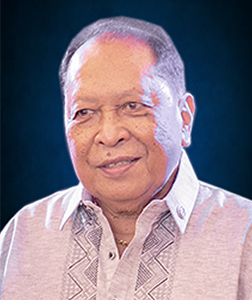
Arleigh Jay Sitoy (1998–2007)
Arleigh Jay Sitoy is a Filipino politician known for serving as mayor of Cordova, Cebu, from 1998 to 2007. A member of a prominent political family in the province, he played a key role in shaping the municipality’s local governance and development initiatives during a period of rapid regional growth.
He focused on improving governance and strengthening local administration.
He supported programs that enhanced public services and community development. His leadership contributed to the modernization of Cordova’s municipal systems.
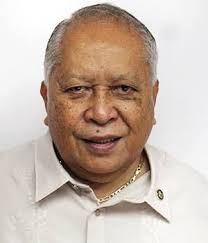
Arleigh Jay Sitoy (2008–2016)
He led major infrastructure and development projects in the municipality. He promoted Cordova on a national level through his leadership and public service. His administration contributed to economic growth and improved local facilities. He also supported programs that benefited the community and public welfare.
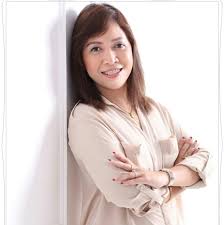
Mary Therese Sitoy-Cho (2016–2022)
Her administration is remembered for promoting inclusive development while balancing modernization with community needs. After completing two terms, Sitoy-Cho was succeeded in 2022 by Teche Sitoy-Cho, reflecting continued family involvement in Cordova’s local governance.
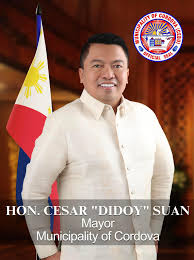
Cesar Suan (2022–Present)
Cesar Suan is a Filipino politician serving as the mayor of Cordova, a municipality in Cebu Province, Philippines, since 2022. He succeeded Mary Therese Sitoy-Cho and leads the local government in implementing development and infrastructure programs aimed at boosting tourism and economic activity on Mactan Island’s southern tip.
He continues to lead infrastructure and development projects in Cordova. He focuses on improving public services, economic growth, and community welfare. His leadership aims to strengthen the municipality’s progress and long-term development.
SCHOOL OFFICIAL PICTURES